Every K-Soul Seal result can include a character dressed in hanbok. The character is not a portrait of you. It is an illustration built from one of the five elements, and each element has a fixed palette, season and set of keepsakes taken from Korean tradition. This page explains those choices, the drawing styles, and how the images are made.
Which element is used
Your reading suggests three Korean names, and each suggestion says which element it is chosen to strengthen, usually one that is scarce in your chart. The character is drawn for that element of the first name. This is different from the sound elements shown on our name pages, which come from each syllable's first consonant. A name can sound like Metal and Earth and still be chosen to bring in Wood, so a character labelled "for Wood" next to a name is not a contradiction. The worked example walks through one case from birth date to character.
From the form to your character
On the name form you enter your birth date, choose 陽 or 陰, and pick a drawing style. If you leave the style empty, one is chosen at random.
Your reading and three name suggestions appear first, each with a Hangul seal. The character starts painting on its own once the names are ready; you do not need to press anything.
When it is finished, the character appears with the first suggested name, labelled with the element it was drawn for. You can download it as a PNG or put it on a share card together with your seal.
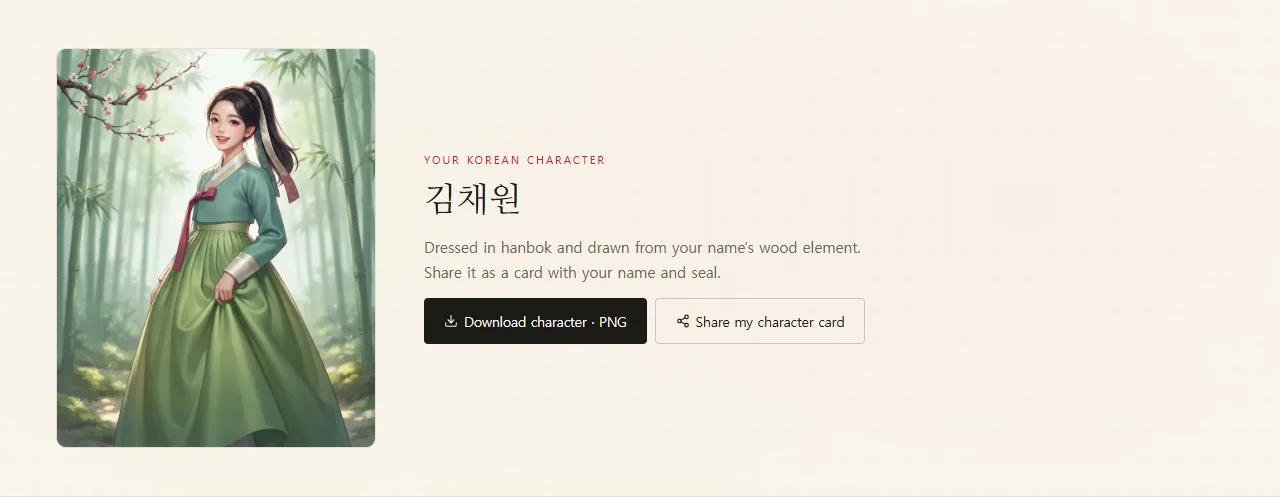
A real result from a test reading with the Elegant style. The first name was chosen to strengthen Wood, so the character wears greens in a bamboo grove with plum blossom.
You cannot pick the element yourself: it always follows the first name's element, so the picture stays consistent with the reading it came from. If you would like a different look, the style is the part you control.
The five elements, one by one
Wood 목 (木)
Palette
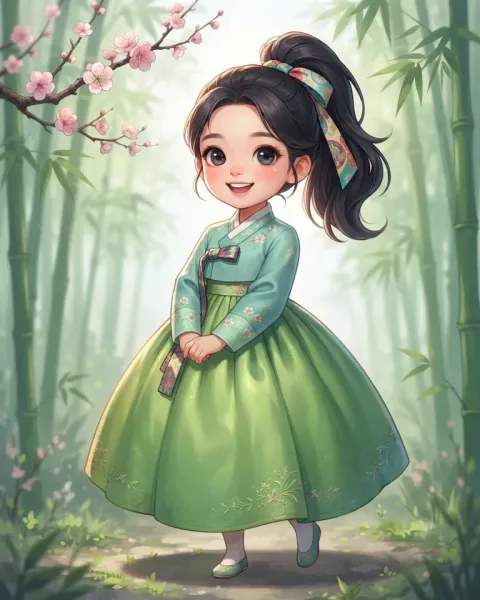
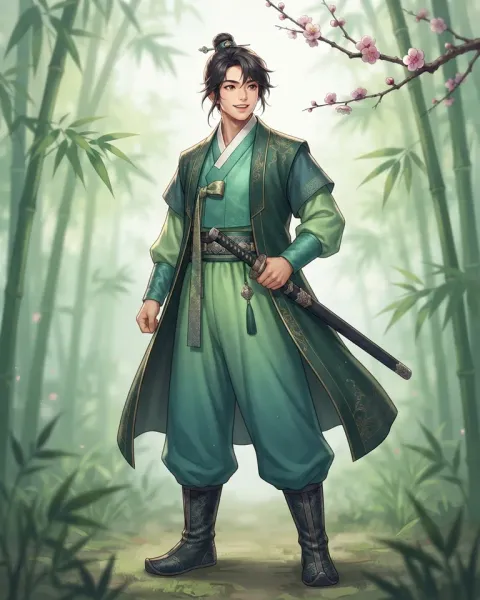
Teal green and fresh spring green
Scene
A spring bamboo grove
Keepsakes
Bamboo leaves and a plum blossom branch
For Wood · Cute
For Wood · Strong
In the five-direction color scheme known as obangsaek (오방색), Wood belongs to the east and to spring, and its color is cheong (청), a word that covers both blue and green. That is why the Wood character is dressed in greens and placed in early spring.
Bamboo and plum blossom are two of the "Four Gentlemen" (사군자) of Korean ink painting, along with the orchid and the chrysanthemum. Bamboo stays green all year and grows straight; plum blossom opens at the very end of winter, so it has long stood for the first sign of spring.
Fire 화 (火)
Palette
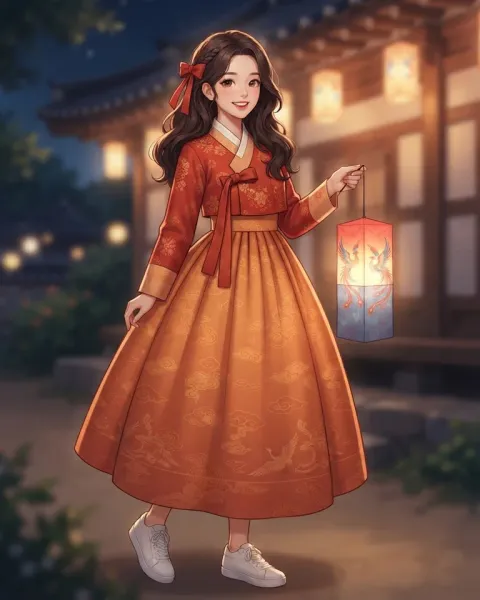
Vermilion red and warm orange
Scene
A summer night with glowing lanterns
Keepsakes
A cheongsachorong silk lantern with phoenix motifs
For Fire · Modern
Fire belongs to the south and to summer, and its obangsaek color is red. A summer night lit by lanterns keeps the warmth of the element without showing actual flames.
The cheongsachorong (청사초롱) is a red-and-blue silk lantern from the Joseon period, still seen at traditional weddings and festivals. Bird motifs echo the Vermilion Bird (주작), the guardian traditionally placed in the south.
Earth 토 (土)
Palette
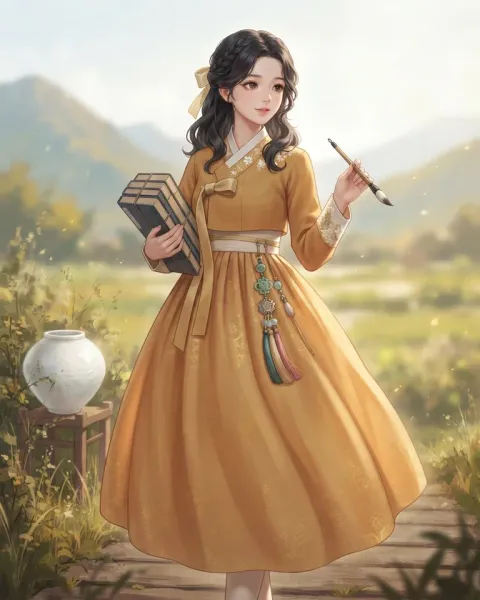
Ochre yellow and soft gold
Scene
Late-summer mountains and fields
Keepsakes
A white moon jar and a tasseled norigae ornament
For Earth · Intellectual
Earth sits at the center of the five directions, and its color is yellow. In the seasonal scheme it is linked with the turn of late summer, the stretch between growth and harvest, so the scene is ripening fields under hills.
The moon jar (달항아리) is a round white porcelain jar from the Joseon period, admired for its calm, full shape. The norigae (노리개) is a tasseled ornament hung from the ribbon of the jacket or from the skirt, one of the most recognisable hanbok accessories.
Metal 금 (金)
Palette
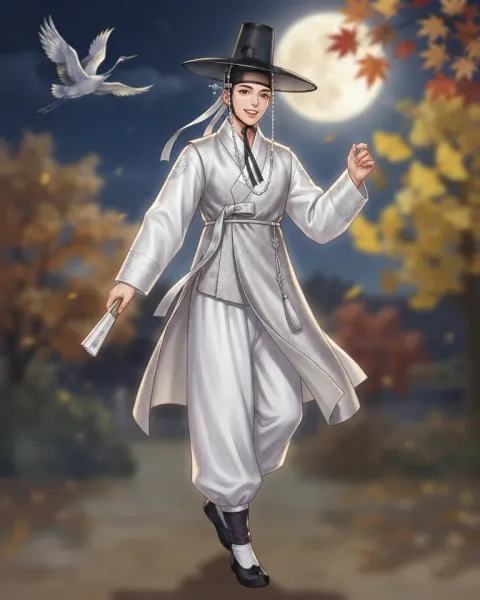
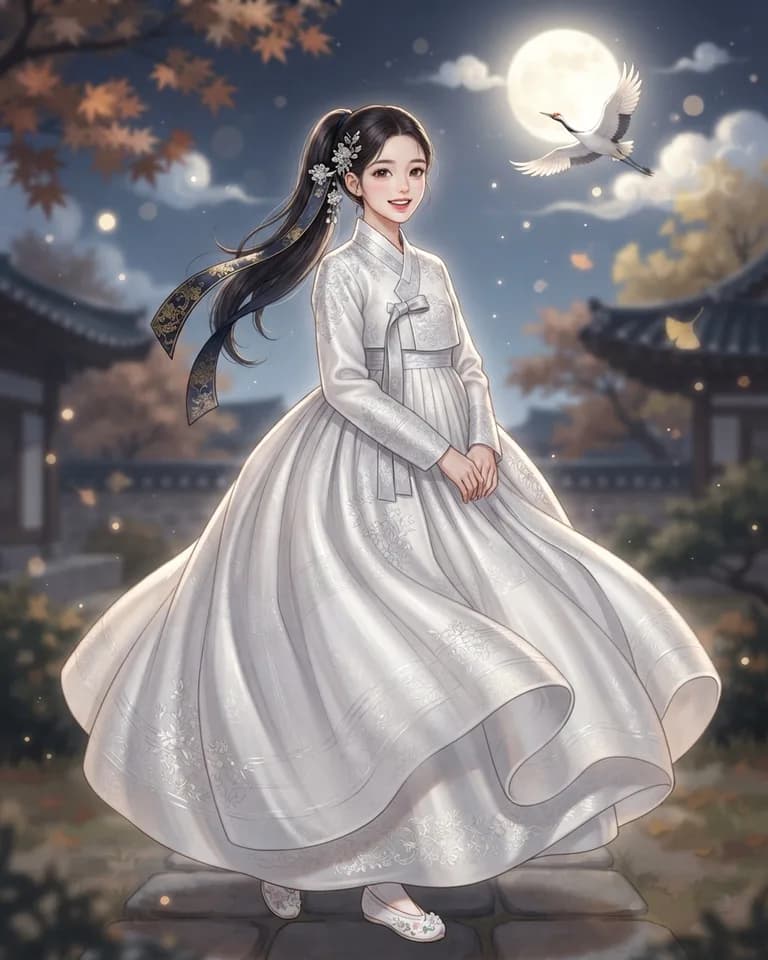
White and silver
Scene
An autumn moonlit night
Keepsakes
A flying crane and silver hair ornaments
For Metal · Traditional
For Metal · Elegant
Metal belongs to the west and to autumn, and its obangsaek color is white. A clear autumn night with a bright moon gives the cool, sharp light the element is associated with.
The crane appears throughout Korean decorative art as a symbol of long life and of an upright, scholarly bearing, and white cranes suit the Metal palette. Silver hair ornaments add the metal itself.
Water 수 (水)
Palette
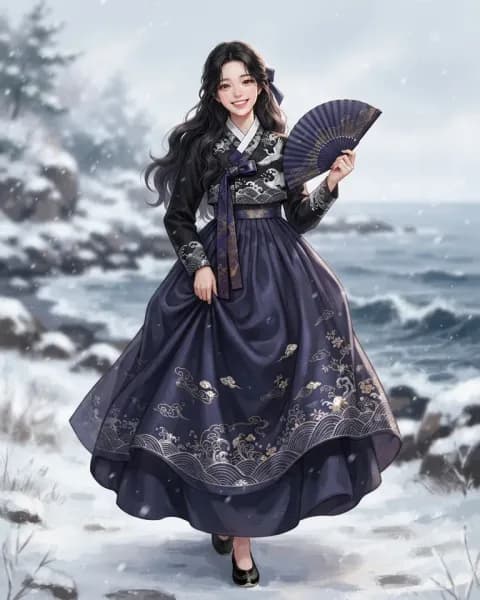
Deep indigo and black
Scene
Winter with gentle waves
Keepsakes
A folding fan and wave patterns
For Water · Elegant
Water belongs to the north and to winter, and its obangsaek color is black, softened here to deep indigo so the character stays readable. A quiet winter shore with gentle waves keeps the element calm rather than stormy.
Wave patterns are one of the oldest water motifs on Korean textiles and ceramics, and the folding fan (부채) is a familiar hanbok accessory that echoes their curve.
Six drawing styles
You choose a style on the form before your reading. The style changes only the look of the drawing; the element still decides the colors, scene and keepsakes.
Cute. Chibi proportions, two or three heads tall, with a round face and a pastel hanbok.
Elegant. A graceful webtoon-style figure in flowing silk.
Traditional. Formal Joseon-era hanbok with accessories such as a gat hat or a binyeo hairpin.
Modern. Hanbok-inspired streetwear with traditional pattern accents.
Intellectual. A seonbi (scholar) motif, with books and a calligraphy brush.
Strong. A hwarang (young warrior) motif with a confident stance.
How the images are made
Characters are generated with Google's Gemini image model from a fixed description: the element's palette, scene and keepsakes, the chosen style, and the gender selected on the form. A small hairstyle variation keeps two people with the same element and style from getting near-identical pictures. Nothing you type is placed in the prompt, and the pictures are asked to contain no writing, so a character never shows a name in Hangul or hanja; the name belongs to your Hangul seal instead.
The description asks specifically for Korean hanbok — a short jeogori jacket tied with a goreum ribbon and a high-waisted, bell-shaped chima skirt, or jeogori with baji trousers or a durumagi coat — and rules out features of Chinese hanfu such as a large sash bow at the waist or very wide sleeves. AI images can still get details wrong, such as hands, accessories or the drape of the skirt. To keep costs predictable there is a daily limit on new characters, so on busy days the character may be unavailable while the rest of your result works as usual.
A cultural keepsake, not a prediction
The element correspondences on this page are traditional associations used in Korean art and design. They describe a visual language, not your personality or future. To learn more about the elements themselves, read The Five Elements; for the colors and the clothing, see Obangsaek and Hanbok Explained.