This is an invented example
From a birth date to a Korean name and seal
Follow one fictional birth date through a chart, a simple element count, and three name ideas. This is a fixed, editor-selected illustration, not a real person's reading or a live AI result. No personal information is needed to view it. The live experience uses Gemini for its Saju interpretation and name suggestions.
1. The example birth chart
Gregorian date: . Birth hour: unknown. This example uses the Korean civil date (Korea Standard Time), a midnight day boundary, and solar-term month boundaries, with no adjustment to local solar time. The unknown hour is left empty, so only three of the four pillars contribute to the count.
| Pillar | Heavenly Stem | Earthly Branch |
|---|---|---|
| Year | 乙 (을)Wood | 亥 (해)Water |
| Month | 己 (기)Earth | 卯 (묘)Wood |
| Day | 甲 (갑)Wood | 辰 (진)Earth |
| Hour | Unknown — not counted | Unknown — not counted |
Year: Eul-hae (乙亥). Month: Gi-myo (己卯). Day: Gap-jin (甲辰). The calendar calculation and sources are explained below.
2. Counting the five elements
Count each known stem and branch once, using the same simple occurrence-counting approach requested in the site's reading. There are six positions: 乙 and 甲 are Wood; 亥 is Water; 己 and 辰 are Earth; 卯 is Wood. Each occurrence is one sixth of the total.
- Wood3/6 · 50%
- Fire0/6 · 0%
- Earth2/6 · 33.33%
- 0/6 · 0%
- Water1/6 · 16.67%
Wood is the most represented category at 50%. Fire and Metal are tied for the least represented, at 0% each. The missing hour could change this distribution. These are counts, not measurements of personality, and an absent category does not establish that someone lacks a quality. This example does not apply hidden stems, seasonal weighting, or a full traditional useful-element analysis.
3. Three name ideas to explore
Because Fire and Metal are equally absent in this count, these examples explore both through hanja meanings and character imagery. They are selected from our name dictionary, without an assigned surname. This is separate from the dictionary's initial-consonant sound elements; the classifications need not match, and no name changes the birth chart.
Eunseo (은서)
銀書
- 銀 (은 은) — silver
- 書 (글 서) — writing
Silver is a metal, so 銀 offers a literal Metal image for one of the two absent categories. 書 adds the idea of writing; this is a meaning-based choice, not a prediction about the person.
Hyunseo (현서)
炫瑞
- 炫 (밝을 현) — bright
- 瑞 (상서 서) — auspicious
炫 means bright and includes the fire component 火. It offers a Fire-related image for the other absent category, while 瑞 adds the dictionary meaning auspicious; that meaning does not promise good luck.
Chanyoung (찬영)
燦永
- 燦 (빛날 찬) — shine
- 永 (길 영/읊을 영) — long, recite
燦 means shine and includes the fire component 火, another way to reference Fire through a character. 永 supplies a sense of length or duration; a personal wish built around these meanings is separate from a fixed translation.
4. The Hangul digital seal
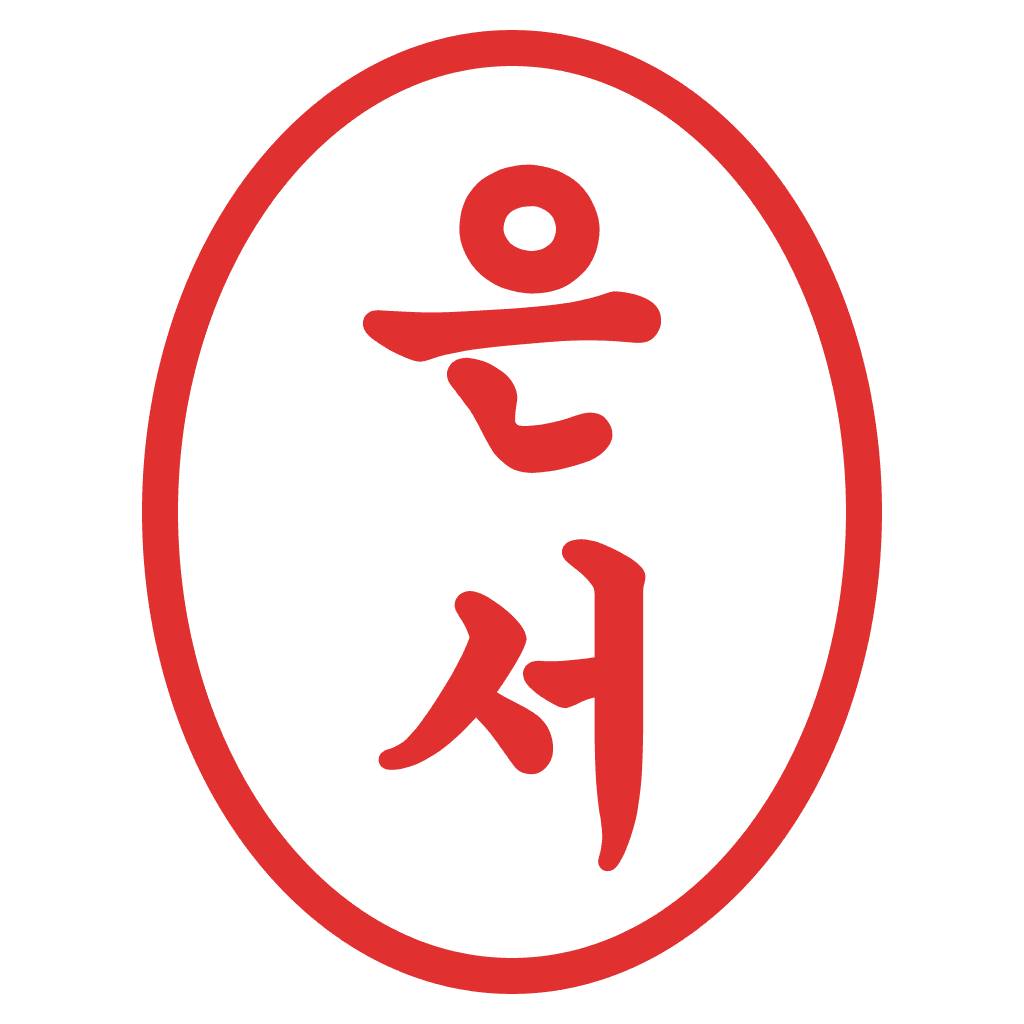
Your seal is carved in Hangul. For this digital version, the Korean spelling is rendered from Gungseo-style font outlines, rather than physically engraved. The image displays 은서; the selected hanja 銀書 explain a possible meaning and are not the lettering inside the seal.
5. The hanbok character
The live result also draws a character in hanbok. Its colors, season and keepsakes come from one element: the element the first suggested name is chosen to strengthen. In this example the first idea, Eunseo (銀書), uses 銀 (silver) as a Metal image, so the character below was drawn for Metal in the Elegant style.
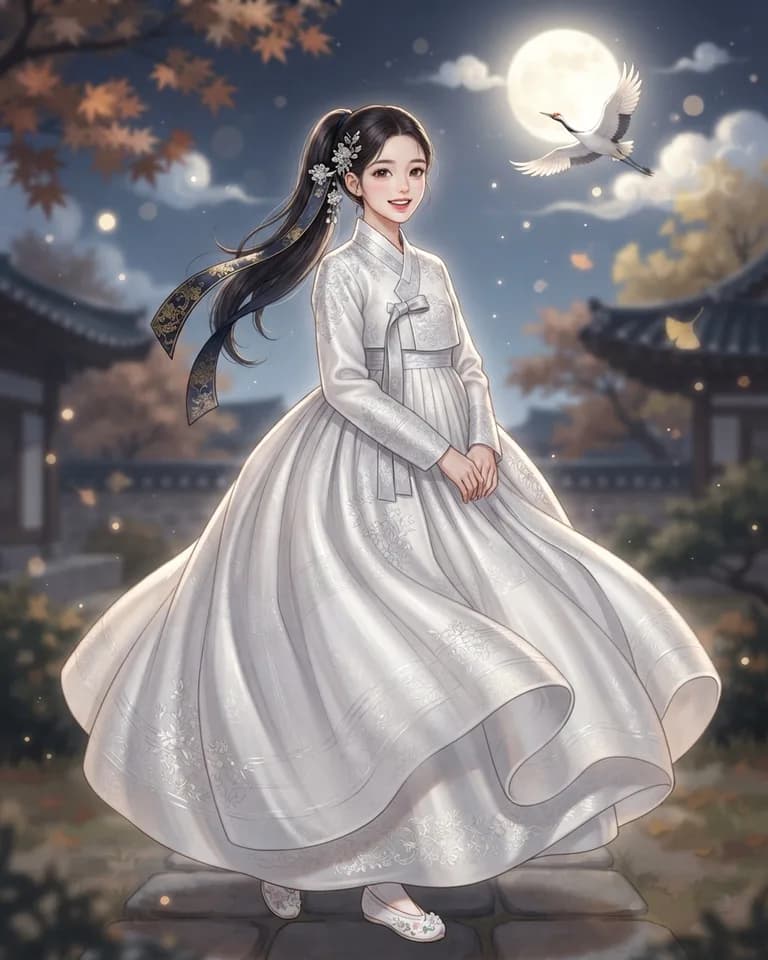
Each element has a fixed palette, scene and set of keepsakes. Metal is linked with white, the west and autumn in the traditional five-direction color scheme (obangsaek), so the scene is an autumn night and the hanbok is white and silver. The crane is a long-standing symbol of longevity and a clear, upright bearing in Korean decorative art. The style you pick (Cute, Elegant, Traditional, Modern, Intellectual or Strong) changes only the look of the drawing, not its element.
Notice that this element is separate from the sound elements on the name pages: by its first consonants, 은서 is Earth (ㅇ) + Metal (ㅅ). The character follows the reading's intention for the name, not its pronunciation. The image is generated with Google's Gemini image model from your session data only (element, style and the gender you chose); nothing you type is placed in the image prompt, and the picture never contains writing. See how each element's character is designed.
Calendar method and reference sources
The Hong Kong Observatory's 1995 calendar table (PDF) identifies the Yi-hai year and lists Start of Spring on 4 February, Awakening of Insects on 6 March, and Clear and Bright on 5 April. This date is well inside the Mao solar month.
Using the solar-term convention for Saju, the year is 乙亥. In the Observatory's stem-and-branch tables (Tables 2 and 4), a Yi-year Mao-month takes the stem Ji, giving 己卯.
For the day, Gregorian 14 March 1995 has Julian day number 2449791. The zero-based sexagenary index is (2449791 + 49) mod 60 = 40, the 41st pair, 甲辰. As an independent anchor, the Observatory's November 2022 almanac (PDF) marks 7 November as 甲子. Counting back 10,100 civil days gives the same 甲辰 pair. The hour remains unknown; no hour stem or branch is invented.
What this example can tell you
Saju is a cultural tradition, not a scientific prediction. This illustration shows one counting method and a few character choices, not an assessment of your personality or future. It does not promise changes in health, money, relationships, or luck. Live Gemini-generated readings can contain errors; review a name's spelling and meaning before using it for anything lasting.
Explore your Korean name